A Global Guide To Football Transfers
Download Guide Here



A Global Guide To Football Transfers

Doping and sports are intertwined since the first organized sporting events. This developed a central issue that sporting organizations have been trying to overcome, the loss of sports integrity. The unique selling point of sport in societies is its unpredictability. Doping provides a competitive advantage which, aside from being unethical when discovered, diminishes this uncertainty of outcomes, resulting in fan frustration and loss of interest.
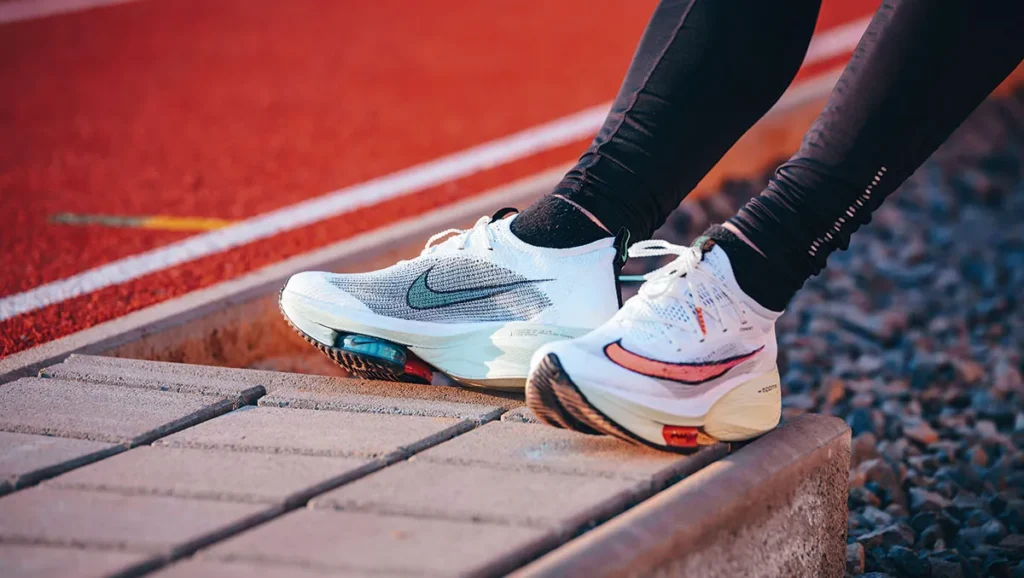
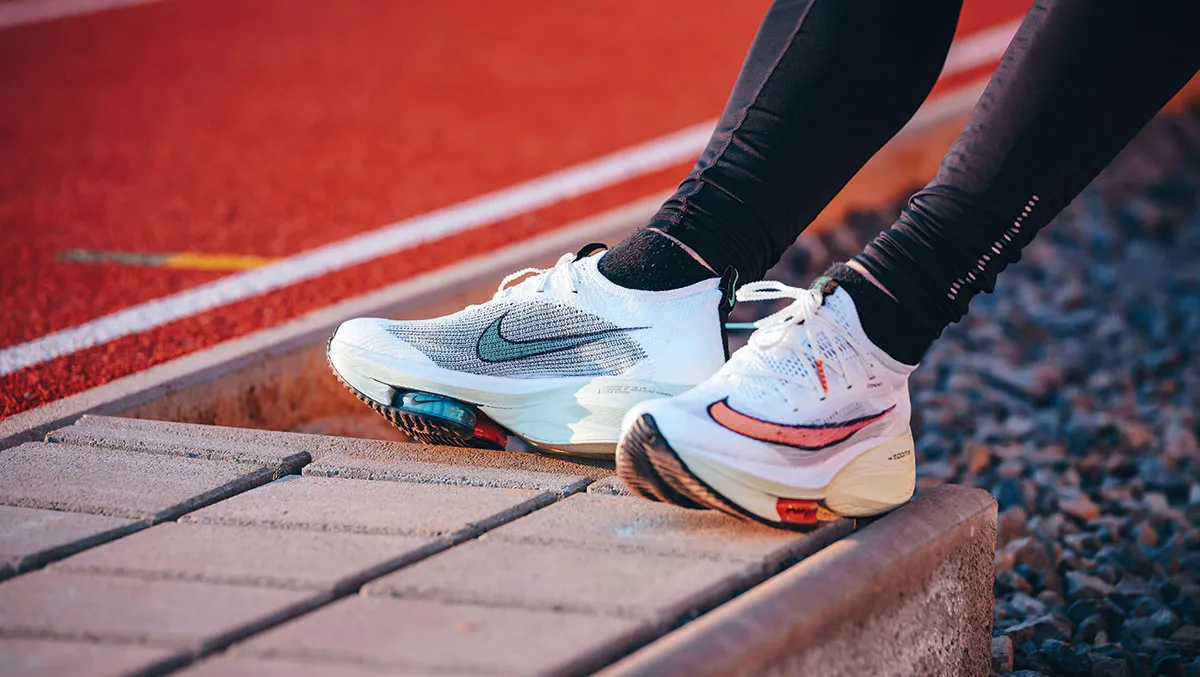
In recent years, with tests for doping becoming more accurate and strictly regulated, perpetrators have developed new ways to overcome testing. One of the most controversial scandals has been the state- sponsored Russian doping scandal. Another less known development in recent years has been the rise of ‘technological doping’; which refers to enhancing an athlete’s performance through the use of new technological equipment. This has been subject to many controversies as the equipment give athletes an increased performance, due to the material and the technology behind it, the most prominent examples being the Nike Vaporfly, the Speedo LZR full-body swimsuit and the Nike Alphafly.
In 1936, the first athletics shoes were introduced, and from that point onwards sporting companies started to develop new technologies in order to support and improve athletic performance. In those instances, these developments were not considered as ‘technological doping’ as they were not deemed threatening to competition, but rather seen as innovative. This begs the question; should ‘technological doping’ be treated as a new paradigm of doping, or as pushing the limits of human performance by elevating the attainable standards in sporting competitions?
When Speedo revealed its LZR swimsuit in the 2008 Beijing Olympics, the product was within the guidelines set by FINA. It led athletes to break world records due to the aquadynamics in the non-textile material used. Following these events, FINA developed new regulations for competition swimsuits concerned with the material used in production, stating that a swimsuit cannot aid an athlete’s “speed, buoyancy and endurance”. These new regulations rendered the Speedo LZR non-compliant with FINA’s regulations. The main point of controversy is that FINA did not foresee the technological development, and result deemed a previously legal technology illegal.
The Nike Alphafly controversy is another key example of this debate. In 2019, Eliud Kipchoge broke the two- hour marathon barrier wearing Nike Alphafly shoes. These shoes featured advanced technology, including multiple carbon plates and thick midsoles, leading to debates about unfair advantages. In response, World Athletics introduced regulations in January 2020, limiting shoes to a single carbon-fibre plate and a midsole thickness not exceeding 40mm, effectively banning the original Alphafly design from elite competitions. This regulatory change highlights how sporting authorities struggle to keep pace with rapid advancements in sports technology, often reacting to innovations only after they disrupt competition standards.
Hence this raises the problem that, due to these technological advancements, sporting federations are unsure of the externalities, and the impact they may have on the integrity of the sport. This results in a dichotomy for the sports industry. Sporting manufacturers are bodies which contribute to the creation of the competition, as without them no equipment would be available. These base their core values on innovations and, as Porter states, innovation is achieved through ‘economic growth, productivity growth, economic prosperity & an International Competitive Advantage of nations, regions and firms’. For this reason, governing bodies should encourage innovation, rather than resisting them. This situation shows how a sporting company managed to produce a better product than its competitors while in line with regulations, but the external environment was not ready for it, deeming the product a failure.
A central topic is the distinction between integrity and commercialization. Sports integrity is defined by the notion of fair play, having compassion for others, responsibility and honesty in adhering to rules. However, there are contradictions when comparing this notion to the definition of ‘sport’, where “competition” is a central part of the definition. From a certain perspective, competition and compassion are opposites and cannot co-exist. We know this is not true, which is what ‘Fair Play’ is all about; promoting the idea that an athlete behaves with higher integrity to set an example of sportsmanship. But, in reality, their ultimate goal is to win. As such, sports equipment producers are fulfilling their function by providing the professional sporting world with equipment that will allow for superior performance. The Speedo LZR was complying with FINA’s regulations, the notion of sports integrity and the definition of ‘sport’. Speedo’s concept of increasing aquadynamics is the same as the 2013 ‘S-Works Evade’ aero helmets which improve a 200m sprint at 1000 Watts by 2.6 meters. The same goes with the Nike Vaporfly, which guarantee that in each step an athlete makes, less energy is lost compared to normal shoes. These products do not push the athlete’s internal performance like prohibited substances do, but rather, they reduce detrimental external factors to performance. Thus sporting federations, instead of adapting to the externalities or preventing them by changing the policies of what is allowable in sport, rather opt to ban them.
Sporting organizations and federations should consider reviewing the policies and laws related to the concept and definition of “performance-enhancement”. Sporting outcomes are uncertain, and that is what attracts the audience. Both athletes and equipment manufacturers are essential in maintaining this uncertainty of outcome. It is with no surprise that sport is also being affected by the innovation brought about by the dynamic, ever-changing state of the world today, thus it should adapt rather than resist.
In order to reduce controversies and improve the competition standards, WADA alongside with sporting federations, should develop an external technological doping committee, which specifically reviews consensual rules for regulating technological doping. This allows for the sports integrity to be preserved but at the same time it accounts for the role of innovation. Once a new technology will be launched, depending on how competition-stifling it is, these committees will have to meet in order to decide whether it complies with the regulations. By doing so it will assure consistency in technological doping standards, set by a central organization without having different federations dealing with it in different ways, allowing for innovation to be adopted rather than rejected.
Through media appearances, industry commentary, and strategic insights, we contribute to the evolution of sport