A Global Guide To Football Transfers
Download Guide Here



A Global Guide To Football Transfers
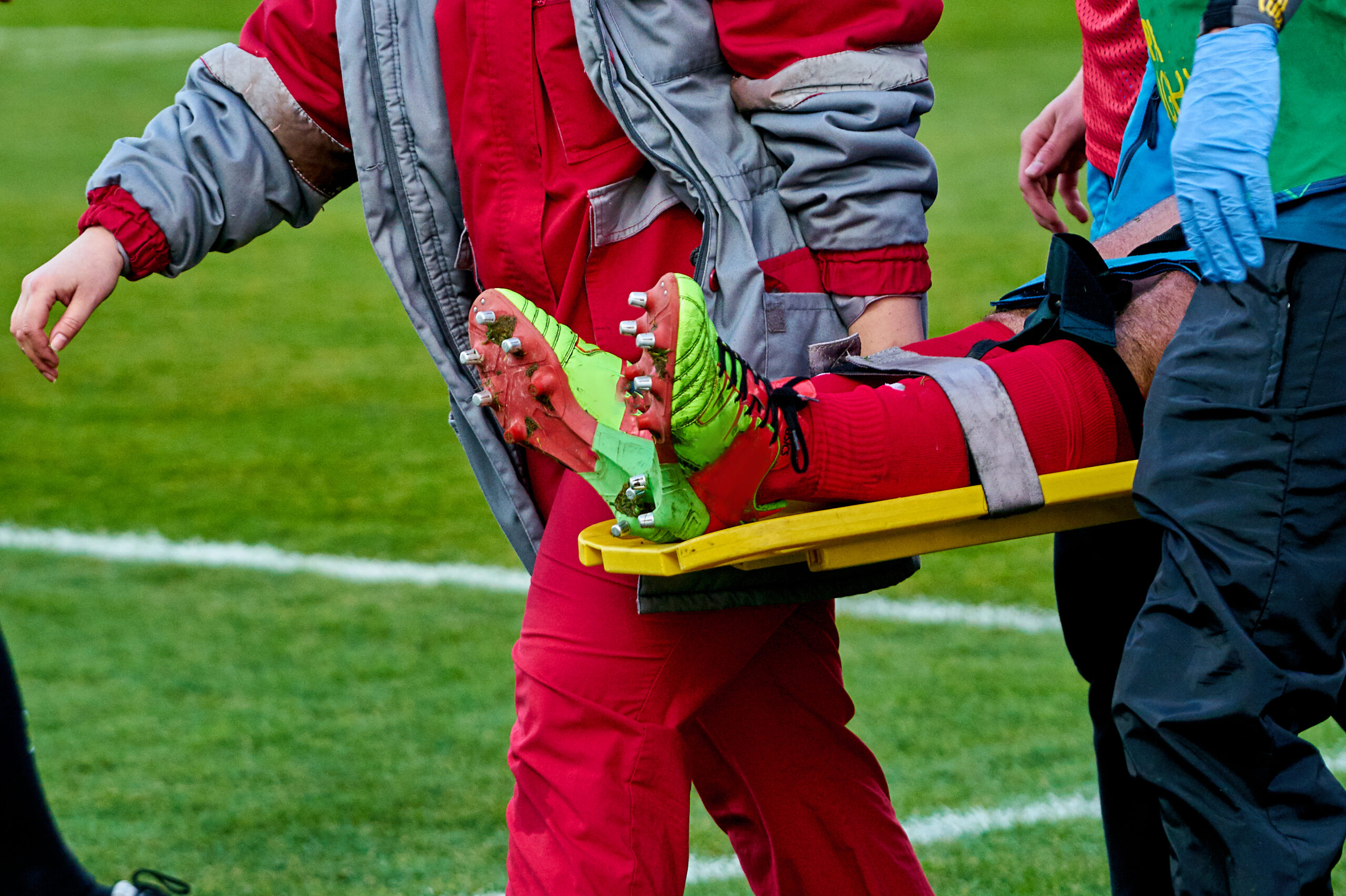
The tragic deaths of Matilde Lorenzi and Matteo Franzoso on ski slopes, and the fatal injury suffered by Billy Vigar at an Isthmian League Premier Division match, were not isolated incidents. They form part of a broader pattern that runs through many sports: while elite competitions are governed by robust safety standards, lower-tier events and training environments are often left dangerously exposed.
These tragedies, together with the serious injury of Samuel Asamoah after colliding with pitch-side LED boards in China’s second division, highlight a regulatory gap that is both obvious and preventable.
At the top of the sporting pyramid, infrastructure is designed to manage risk. Courses and pitches are inspected, barriers are padded and recessed, run-off areas are carefully measured and medical teams stand ready. This is the result of binding regulations, insurance requirements, and commercial imperatives tied to elite competition.
Outside the spotlight, the picture changes dramatically. At lower league football matches, youth tournaments, lower-category skiing events and training camps, safety measures are often minimal, outdated, or entirely absent. The risk to participants, however, does not change. The human body does not move more slowly or less forcefully simply because an event lacks television coverage or a title sponsor. A collision at 80 km/h on a training slope or into a concrete wall at a lower league football ground is just as devastating as it would be at the Winter Olympics or in the Premier League.
This uneven landscape is precisely where tragedies tend to occur. Matilde Lorenzi’s fatal fall occurred at the end of the descent, in a section not considered particularly dangerous, yet no safety barrier had been placed there. Matteo Franzoso suffered a fatal head injury after hitting a fence several meters away from the training piste. Billy Vigar collided with a solid concrete wall at pitchside. Samuel Asamoah’s neck injury came after hitting an LED board that was placed close to a high-speed playing area.
In all four cases, the regulations failed to require infrastructure robust enough to protect them. In this piece, I use skiing and football as case studies to show how safety standards tighten at the elite level but loosen in training and lower-tier competition, why that gap exists, and what regulators can do to reduce the risk of serious injury.
The Fédération Internationale de Ski et de Snowboard (FIS) has developed some of the most technically detailed safety regulations in sport. Its International Competition Rules (ICR) set out in detail the protective measures required for all events in the FIS calendar, such as the Alpine Ski World Cup.
Article 702.3 of the ICR provides that obstacles against which competitors may be thrown “should be as well protected as possible with high safety nets, safety fences, pads or similar means if necessary, together with slip-sheets.” This provision establishes a clear expectation that dangerous areas must be properly safeguarded. However, while the word “should” establishes a default duty, the phrases “as possible” and “if necessary” introduce the significant element of discretion to event organisers. This flexibility, which hinges on the organiser’s judgment of feasibility and hazard level, can result in uneven and, at times, dangerously inadequate levels of protection.
The subsequent provisions of the ICR set out how these protections are to be implemented and monitored in formal competitions and official training sessions. Article 703.2.1 requires all protective installations to be in place before the Jury inspection for Downhill events. The Jury is the panel of technical officials appointed by FIS and the race organiser to supervise the race, assess whether the course and safety installations comply with the ICR, and, where necessary, require changes before training or racing can begin. Article 703.2.2 adds that, “before the start of training on the first official training day, there must be an inspection by the Jury with the technical advisor, if present, and generally also in the presence of the team captains or trainers.” In addition, Article 704.4 requires the presence of adequate medical services during official training sessions.
Together, these provisions create a comprehensive regulatory structure for “all events in the FIS calendar”: homologation of courses, installation of multiple net layers and padding in high-risk areas, and formal inspections before training and racing. Yet, this structure only applies to competition courses and official training linked to those FIS calendar events. It therefore does not govern by default pre-season training camps or lower-category races (for example, regional junior events sanctioned only at national level), even though these are where many athletes spend most of their time on snow.
The practical consequences of this regulatory gap were tragically illustrated in the deaths of Matilde Lorenzi and Matteo Franzoso. In both cases, the athletes were on non-competition training runs rather than on courses homologated for events in the FIS Calendar: Matilde Lorenzi was taking part in a giant-slalom training session in Val Senales (Italy), while Matteo Franzoso was in pre-season speed training in La Parva (Chile). Both athletes were skiing at speeds comparable to those seen in elite competitions, but the infrastructure around them was drastically different. Matilde Lorenzi’s fall occurred in a section of the slope considered low risk, where no protective barriers had been installed and nothing mitigated her fall. Under FIS event rules, even ostensibly “low-risk” sections of a homologated course are still subject to a systematic risk assessment by the Jury, with nets or padding installed where a fall could carry an athlete towards fixed obstacles. In the absence of that process, the area into which she fell had simply not been treated as a zone requiring protection. According to the Italian Winter Sports Federation (FISI), Matteo Franzoso crashed through two rows of netting and hit a fence off the course which had no padding. Outside FIS-calendar competitions and official training on the homologated race piste, there is no single set of FIS rules that universally governs how safety nets must be installed for training or lower-level events. Instead, safety is shaped by a patchwork of national federation regulations, local law and manufacturers’ guidelines, which typically expect training to be run under race-equivalent protection, especially in high-risk zones.
Had these runs taken place at elite level, homologation requirements would have mandated multiple layers of nets, sufficient run-off areas, padding on impact zones, and pre-training inspections. However, as their training fell outside the regulatory perimeter, those protections were not applicable.
Football’s structure differs from skiing’s but suffers the same weakness at thebase of its ecosystem. Premier League and EFL stadiums must meet high safety standards for perimeter structures, advertising boards, and medical coverage. However, at lower league levels, the requirements are minimal.
The FA’s Stadium Accreditation Criteria (often referred to in practice as the FA Ground Grading framework) set out the facility standards for clubs operating at, or seeking promotion within, Steps 1 to 6 of the Men’s National League System, with grade-specific requirements linked to each step. Chichester City, the club Billy Vigar was playing for at the time of the incident, competed in the Isthmian League Premier Division, which is classified as Step 3 of the NLS. Step 3 clubs are therefore assessed against the Grade 3 criteria. Under the FA criteria, the required “run-off” is a minimum of 1.83 metres between the touchline/goal line and the pitch perimeter barrier (with a higher minimum applying at Grade 1). The criteria also require the pitch perimeter barrier to be of sound construction (e.g. concrete and steel) and free from sharp edges. However, the criteria do not expressly prescribe that rigid perimeter structures must be padded or fitted with energy-absorbing materials. Instead, the document includes advisory provisions emphasising that clubs should fix infill panels and sponsors’ signage in a manner that avoids injury to players.
This regulatory gap is compounded by the Safety of Sports Grounds Act 1975, which applies only to stadiums over a certain capacity. The legislation was designed to address crowd safety at larger venues rather than player protection at lower levels of the game. As a result, while higher-capacity grounds must obtain safety certificates and comply with stricter infrastructure requirements, the vast majority of lower league venues fall entirely outside this framework. In practice, this mirrors the position in skiing, where homologation rules apply only to top-tier events, leaving most lower-level competitions and training environments exposed to similar risks with far weaker safeguards.
Billy Vigar’s fatal collision with a concrete wall at an Isthmian League Premier Division match, was a consequence of this regulatory gap. Technically, the venue satisfied minimum distance requirements. However, those standards are about distance, not impact. There was no padding, no energy absorption, and no additional safety layer.
Similarly, Samuel Asamoah collided with an LED board placed close to the pitch. While details of China’s domestic regulations are less accessible in English, the fact that this hazard existed at all reflects a lack of adequate safety regulation or enforcement at lower competition levels. FIFA issues Stadium Safety and Security Regulations and technical Stadium Guidelines for its competitions, which include requirements that advertising boards must not obstruct evacuation routes or create obstacles and recommendations on distances around the pitch. Implementation of comparable standards in domestic competitions, particularly at lower tiers, is largely governed by national association and league regulations, which adopt these principles to varying degrees.
The difference between top-tier and lower-tier regulation is driven by resources, visibility and enforcement. Elite events are shaped by broadcasting, insurance obligations and international scrutiny. Lower-level events, by contrast, are often run by small clubs or local organisers who rely on volunteer staff and operate on thin budgets. They may also be constrained by the venues available to them: many clubs play at older grounds with rigid perimeter structures or limited run-off, and many skiing programmes train on slopes that are not set up like a World Cup course. Even where safety risks are recognised, structural changes (for example, rebuilding a stand or widening a run-off area) can be financially and practically out of reach.
At this level, the binding regulatory levers are often thinner and more fragmented. In football, for example, the FA’s Ground-Grading regime for Steps 1-7 is primarily framed around minimum clearances and facility requirements, but is largely silent on impact-mitigation measures such as mandatory padding or energy-absorbing perimeter design. In skiing, the FIS ICR’s inspection and protective-installation requirements apply for FIS-calendar events and official training, but many pre-season camps and national/regional races sit outside that perimeter, leaving safety to a patchwork of national federation rules, resort operators and local practice. The gap between what is required at the top and tolerated at the base is therefore wide, and predictable in its consequences.
It is not that risks are higher at the elite level. It is that protections are lower everywhere else.
A key component of improving safety standards in sport is the ability to learn systematically from accidents and near-misses. In both skiing and football there are reporting mechanisms at the very top level (for example, race reports and medical summaries in elite FIS events, or incident and injury reports within professional leagues) but these are often limited to more serious cases and are not applied consistently across the wider pyramid. At lower levels of competition and in everyday training, most incidents are not recorded in a centralised way. As a result, federations lack the data needed to identify recurring hazards, assess risks objectively, and implement preventive measures.
Motorsport provides a useful model. FIA-linked safety systems support structured reporting and centralised analysis of serious incidents (including defined categories such as fatal accidents, serious accidents and significant incidents). The aim is to learn from incidents systematically and translate those lessons into improved safety measures and standards, rather than to apportion blame.
The FIA compiles this information centrally and uses it to analyse patterns, detect structural weaknesses, and update safety standards accordingly. It also operates an Accident Data Recorder programme, a kind of “black box” for racing cars, which provides precise data on the forces and circumstances of each crash. This system has directly led to safer circuit layouts, improved barrier technology, and updated safety protocols. Crucially, the system is mandatory but non-punitive, designed to enhance safety rather than apportion blame.
A similar reporting framework in skiing and football would be transformative. If every serious collision with a fixed object, every high-speed fall into an unprotected area, and every medical evacuation from a lower-tier venue had to be reported and logged, national federations would quickly build a data set revealing where risks are most acute. That evidence could then support targeted rule changes, such as mandatory padding of rigid perimeter structures, revised pitch-side clearance standards, or expanded homologation criteria, and help to direct resources towards the highest-risk facilities and practices. It could also be used to prioritise education and training for local organisers, ensuring that lessons learned from one incident are not confined to a single club or region.
In short, what is measured can be managed. Without structured reporting and data-driven analysis, safety remains reactive. With it, federations can act proactively: tightening rules where necessary, supporting clubs and organisers to implement safer designs, and ensuring that the protections afforded to athletes do not depend on whether their competition happens to be televised.
Through media appearances, industry commentary, and strategic insights, we contribute to the evolution of sport